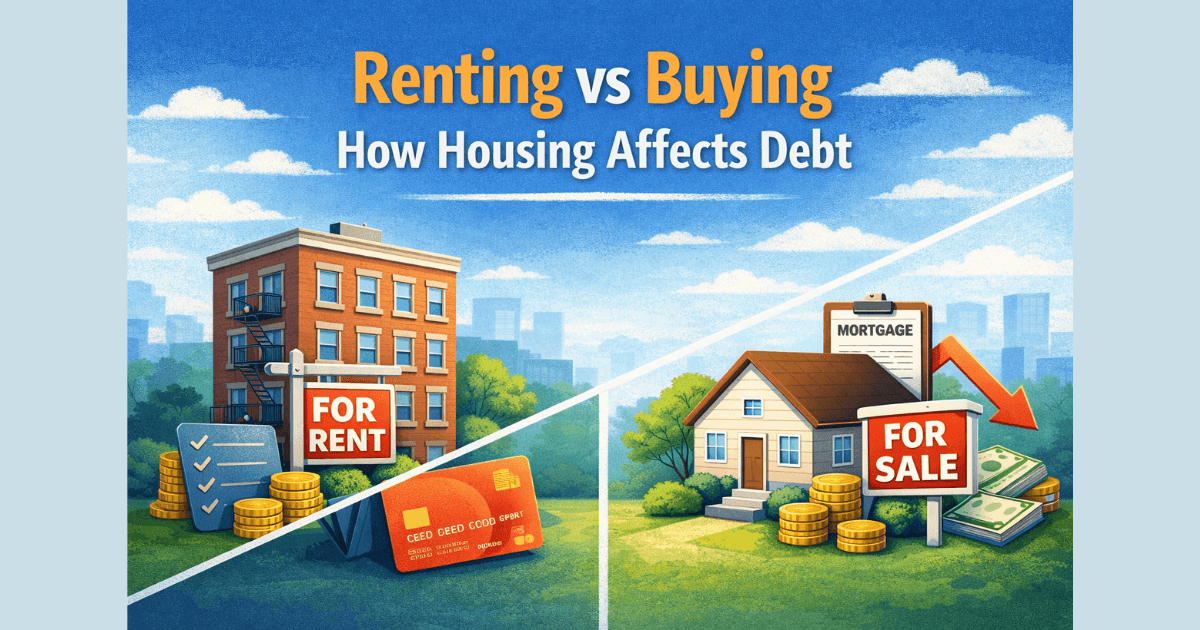
Rent versus buy is not just a lifestyle question. It is a debt and budgeting question. If your housing costs are too high, everything else becomes harder: saving, paying down balances, and staying consistent.
How renting can affect debt and cash flow
Renting typically has lower upfront costs than buying. It can also reduce the risk of unexpected repair bills. That predictability can help when you are trying to stabilize your budget or pay down high interest debt.
- Lower upfront cash: Usually a deposit and moving costs, not a down payment.
- Fewer surprise expenses: Repairs are often the landlord’s responsibility.
- More flexibility: Easier to relocate for work or a lower cost area.
CFPB: Making the decision to rent or buy
How buying can affect debt and long term stability
Buying a home can create long term stability and the potential to build equity. However, it also increases financial commitments. If you buy before your cash flow is ready, you may end up using credit cards to cover normal life expenses.
- Equity potential: Part of the payment may build ownership over time.
- Long term costs: Taxes, insurance, and maintenance can rise over time.
- Less flexibility: Selling quickly can be expensive and stressful.
HUD: Buying a Home
The hidden costs that can create new debt
The mortgage payment is only part of the picture. Many budgets break because the “extras” were not planned for. If you do not have savings, those extras often land on a credit card.
- Property taxes and homeowners insurance
- Maintenance and repairs (including big ones like HVAC, plumbing, roof)
- HOA fees if applicable
- Utilities that may be higher than expected
- Furnishing and moving costs
Freddie Mac: Rent vs Buy Calculator
How to decide if renting or buying fits your debt plan
If you are actively paying down high interest debt
Renting is often the safer choice until your cash flow improves. The goal is to avoid taking on new debt while you are reducing old debt.
If you have stable income and a real emergency fund
Buying may make sense if you can cover the full monthly cost of ownership and still save something each month. A strong emergency fund helps you avoid using credit when repairs show up.
If your budget feels tight even before housing
Focus on affordability first. A housing payment that consumes too much of your income can create a cycle where debt grows even if you are “doing everything right.”
FAQ
Is renting really throwing money away?
Not always. Renting can buy you flexibility and predictability. If it helps you avoid new debt and build savings, it can be a smart move.
What should I have in place before buying?
A stable budget, manageable debt, and an emergency fund that can handle repairs or income disruptions. If those are missing, buying can increase stress and credit card reliance.
Can buying help me get out of debt faster?
It can, but only if the total cost of ownership is comfortably affordable. If buying increases your monthly costs, it usually slows debt payoff.
Need breathing room in your monthly budget?
If housing costs and debt payments are stretching you thin, a quick evaluation can show whether attorney driven debt relief could reduce payments and ease the pressure.
Start your free evaluationPrefer to talk by phone? Call 888-863-3917.